







Futoshiki
 Developer: SBC Games
Published: September 08, 2021
Game Technology: webgl
Compatible Devices: Mobile, Desktop
About Futoshiki
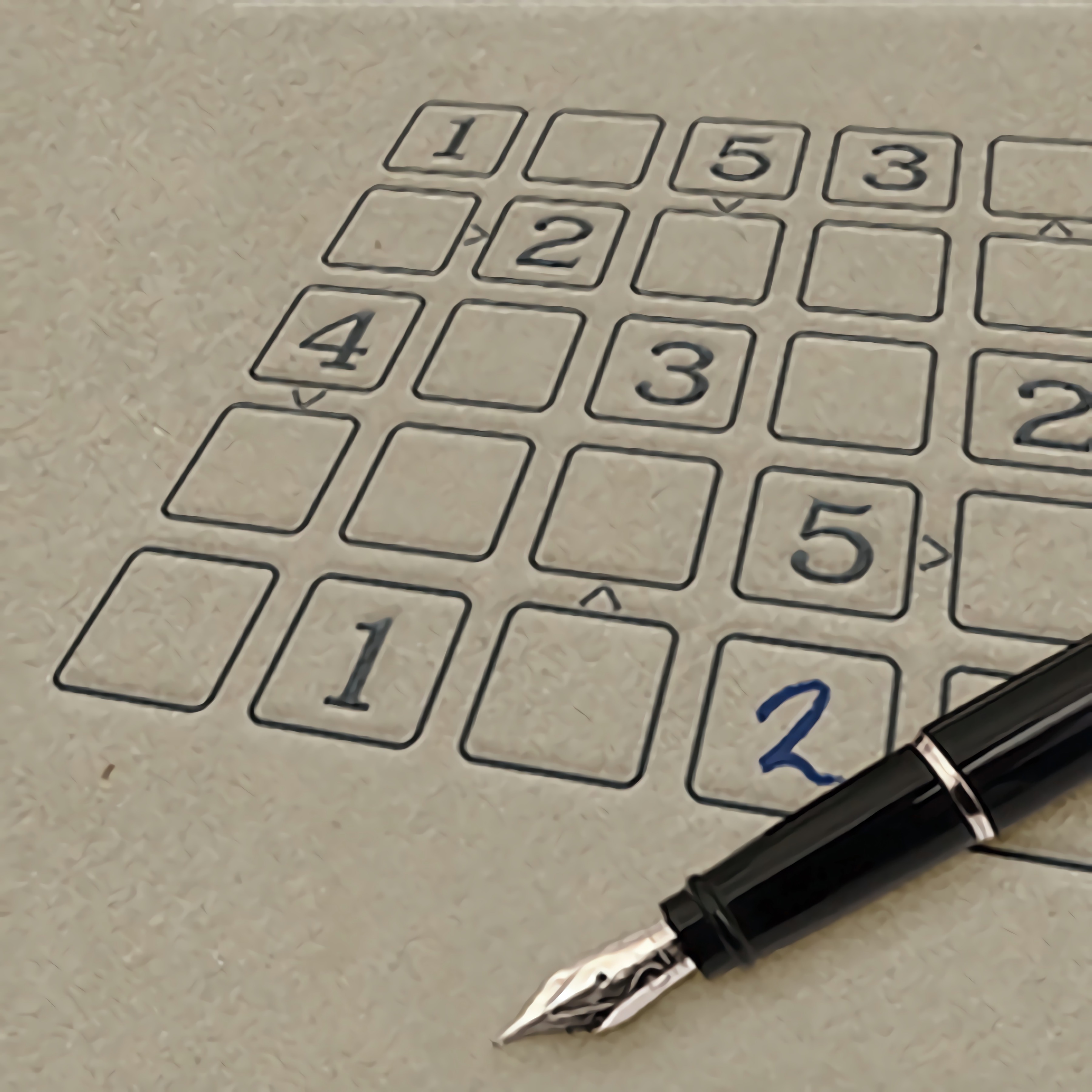
Fill the quiet Futoshiki grid by turning tiny inequality signs into a complete number pattern. This Japanese number puzzle gives you a clean number grid, empty square cells, and just enough clues to make every choice matter. Place the numbers one to five across a 5x5 grid, but watch the sharp inequality arrows closely. One careless duplicate can poison an entire row before you notice it.
Unlike Sudoku, this Sudoku-style logic game is shaped by relational clues between neighboring cells. A less-than sign can start a chain, and a greater-than sign can block a number that looked safe two seconds earlier. That is where the tension sits: a neat guess becomes a trap if it breaks the tidy logic board. The reward is seeing a solved numeric pattern lock into place without forcing it.
Built by SBC Games with WebGL, the puzzle runs in your browser with no download on mobile and desktop. The puzzle generator creates easy difficulty, medium difficulty, and hard difficulty boards, each with a unique solution. Casual players can enjoy solo play in quick sessions, while careful solvers can treat each grid as steady brain training. If you like calm deduction, Desura’s Logic Games section has more thoughtful challenges nearby.
Gameplay
The main task is filling rows and columns with no repeats while obeying every inequality sign. The Japanese puzzle looks quiet at first, but a single wrong number can make three later cells impossible. Start by scanning for places where arrows limit the range, such as a cell that must be smaller than two neighbors. That small clue can turn into the first firm step.
Inequality chains are the advanced strategy to watch. If three cells must rise from left to right, the lowest number cannot sit at the high end, and the highest cannot sit at the low end. This gives the numeric deduction game its own rhythm compared with Sudoku. Players who enjoy arithmetic pressure may also like Math And Dice Kids Educational Game for a lighter number focus.
Common beginner mistakes usually come from repeated numbers hiding in plain sight. A row can look nearly finished, then one duplicate forces you to unwind several confident moves. Check columns after every placement, especially when the board feels almost solved. For more practice with number patterns, Multiplication Simulation connects well with the same careful counting mindset.
How to Play
Pick an empty cell, test the possible values, and remove anything already used in the same row or column. Then compare the cell with nearby inequality signs. If the arrow says one square must be greater, the smaller side cannot hold a five. One rushed tap can break the chain and leave the last square with no legal answer.
Use the difficulty levels as a learning path. Easy difficulty helps you see forced numbers quickly, medium difficulty asks you to combine row checks with relational clues, and hard difficulty makes every assumption feel risky. When the gap between two possible numbers narrows, pause before committing. The board often gives one quiet clue before it punishes a guess.
This grid-based brain teaser uses simple tap/click input, so accessibility comes from clear selection rather than complicated commands. On a phone, tap a cell and choose a number; on desktop, click with the mouse and work through the same logic. Fans of step-by-step reasoning can also browse Math Games for more number-based puzzles. The calm surface can still sting when one late mistake ruins a clean finish.
Controls
Use the basic input for selecting cells, entering values, and moving through the puzzle screen. Every action should feel deliberate, because one accidental placement can send your reasoning backward.
- Mouse / Tap — Select cells and explore the puzzle
Features
This Futoshiki board includes generated puzzles, giving it replay value beyond a fixed set of stages. A fresh arrangement of inequality signs changes where you begin and which cells become pressure points. The 5x5 layout stays readable, yet the clue pattern can make one corner feel like a locked door. Crack it, and the rest of the board opens neatly.
The visual style keeps the tidy logic board easy to scan. Empty square cells, sharp inequality arrows, and clean number markings help you spot conflicts before they grow. That matters most near the end, when the grid looks solved but one column still hides a contradiction. The mistake feels small until the final placement refuses to fit.
Difficulty escalation adds texture without adding noise. Easy boards teach basic no repeats logic, medium boards stretch inequality chains, and hard boards ask you to compare several relational clues at once. The puzzle generator also supports return play, since a new layout changes the route to the unique solution. It is a calm form of pressure.
Similar Games
- Wall Fixing — a puzzle game built around matching shapes into a correct arrangement. It suits players who like scanning a board carefully before making a move.
- Not One — a logic-focused challenge where precision matters more than speed. A small mistake can undo the plan, which makes each choice feel deliberate.
- Snack Mahjong — a tile-matching puzzle with pattern recognition and board reading. It connects well with players who enjoy clearing a layout through observation.
Advantages
- Clear 5x5 grid structure makes the rules readable without hiding the consequences of a bad placement.
- Inequality signs add extra reasoning beyond standard Sudoku, creating chains that reward careful scanning.
- Generated boards provide fresh replay value, so the same solved route does not repeat every time.
- Beginner-friendly input lets you focus on logic instead of fighting the controls.
Frequently Asked Questions
What is Futoshiki?
It is a Japanese number puzzle where players fill a grid with numbers while following row, column, and inequality-sign rules. The goal is to create one complete pattern without repeats or broken relational clues.
How do you solve a Futoshiki puzzle?
You solve it by placing numbers one to five so they do not repeat in any row or column and obey every greater-than or less-than sign. If one number breaks a clue, later cells can become impossible to finish.
Can I play Futoshiki without downloading it?
Yes, it is playable in a browser on mobile and desktop, so you can start a free online puzzle without downloading an app. Desura also offers other puzzle and logic games for players who want more grid-based brain teasers.




 Pixel Driver
 Spongebobs Next Big Adventure
 Bow Master Stickman Hero
 Summer Games: Gumball
 Halloween Island Running
 Bunnicula in Rescuing Harold
 Garden Tales
 Fast Ball Jump
 Return Man Football
 Super Buddy Kick 2
 City Stunt Cars
 Hero 5 Katana Slice
 Real Bike Simulator
 Ball Maze
 Mystery Chase - Scooby Doo
 Perfect Wedding Cake
 Drac & Franc: Dungeon Adventure
 Gumball Strike Ultimate Bowling
 Chibi Fighter Dress Up Game
 Star vs the Dungeon of Evil
 Dynamons 7
 Numblocks Hunter
 Taxi Simulator
 Papa Cherry Saga
 Sniper Mission 3d
 Lemmings Sling
 Monster Truck Driver
 Piggy In The Puddle Christmas
 Offroad Oil Tanker Truck Drive
 Shooter Job
 Hidden Objects Futuristic
 Among Rampage
 Simon Say
 Vampires and Frankenstein Coloring
 Unicorn Dress Up Girls
 Grand Prix Hero
 Sniper Attack
 Blind Shot
 Baby Hazel Naughty Cat
 Disneyland Fashion
 Cannon Shooter
 BBFs Fresh Spring Look
 Tank Rumble